Knowledge Hub
Container Optimization Strategy
Maximize cost efficiency by selecting the right container for every tire type. Reduce shipping cost per tire with proven loading strategies.
Maximize cost efficiency by selecting the right container for every tire type. Reduce shipping cost per tire with proven loading strategies.
We optimize containers based on weight vs volume efficiency to reduce cost per tire. The right container choice can cut shipping costs by 15-30% depending on tire type and order mix.
Best container for OTR tires due to their extreme weight. A single 23.5R25 OTR tire can weigh 450 kg.
TBR tires are stackable and nestable, making them ideal for larger containers that maximize volume efficiency.
PCR tires are lightweight and can be stacked 10+ high. The extra height of a High Cube is essential.
Choosing the wrong container type can waste 20-40% of available space. Our optimization strategy ensures you pay only for the capacity you need.
When ordering multiple tire types, strategic placement within the container maximizes both weight and volume utilization.
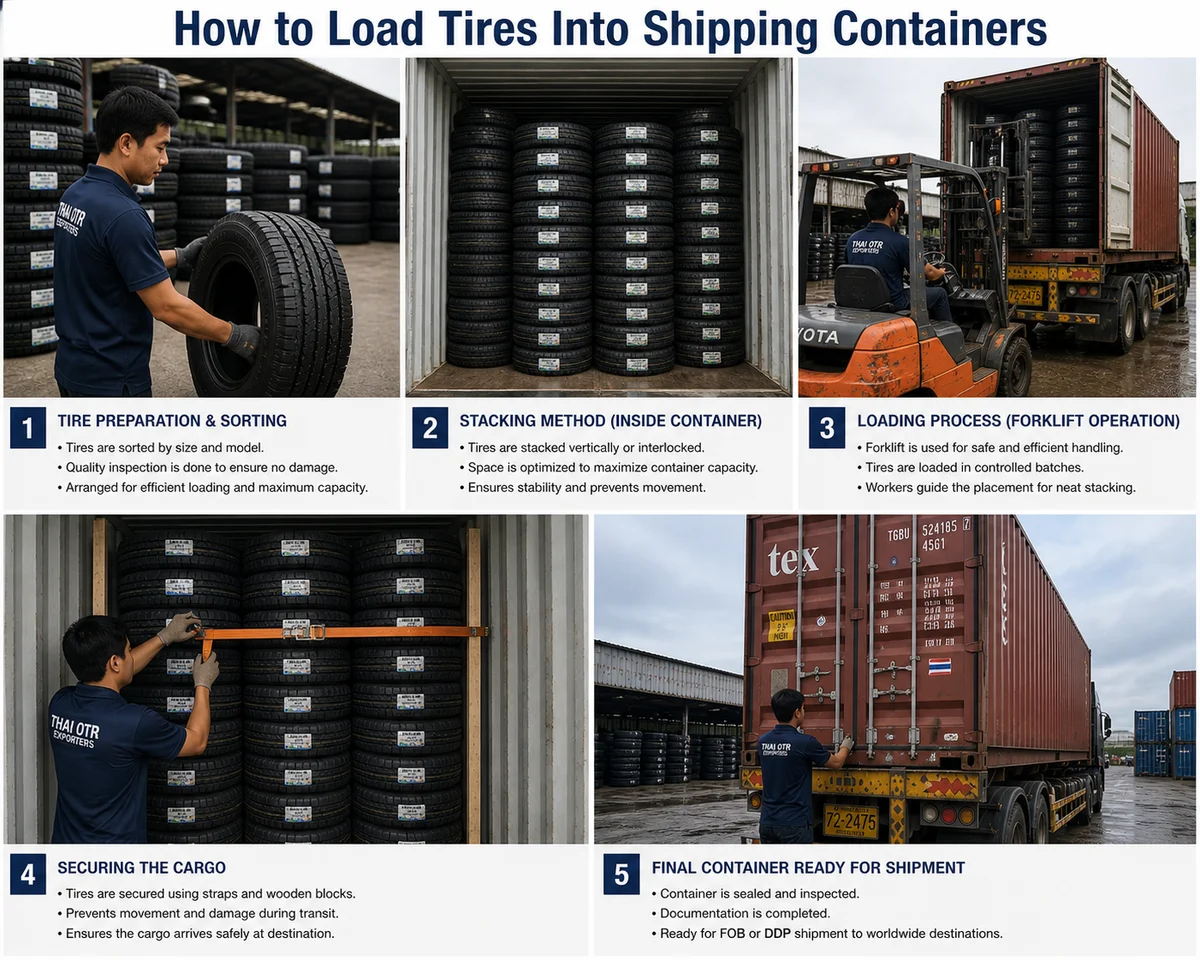
Place heavy TBR tires on the container floor first. Their weight creates a stable base and keeps the center of gravity low for safe transport.
Stack lightweight PCR tires above the TBR layer. Their low weight prevents crushing and fills the remaining vertical space efficiently.
Place cardboard or rubber separators between TBR and PCR layers to prevent pressure damage and shifting during ocean transit.
Use load bars and strapping to lock the mixed load in place. Take photos of each layer for insurance and customs documentation.
A 40ft high-cube container is optimal for mixed tire loads, offering an extra 30cm of vertical space. This allows for an additional tier of PCR tires above larger OTR or TBR tires, increasing total unit capacity by 15–20%.
Yes. Mixed loading is common and cost-effective. Place OTR tires on the bottom tiers for stability, TBR tires in the middle, and PCR tires in the upper tiers. This maximizes space utilization while maintaining safe weight distribution.
FOB Bangkok pricing is calculated by dividing the total container cost by the number of tires loaded. For example, a $28,000 container with 2,500 PCR tires equals 1.20 per tire FOB. Volume discounts apply for multi-container orders.
We provide full export documentation including commercial invoice, packing list, certificate of origin, bill of lading, and quality inspection reports. Additional certificates such as DOT, ECE, or GCC are available upon request for specific markets.
Send us your tire sizes and quantities — we will optimize your container loading plan and quote the most cost-effective shipping solution.